Luis de la Fuente vs Luis Enrique: comparing the two Spain coaches
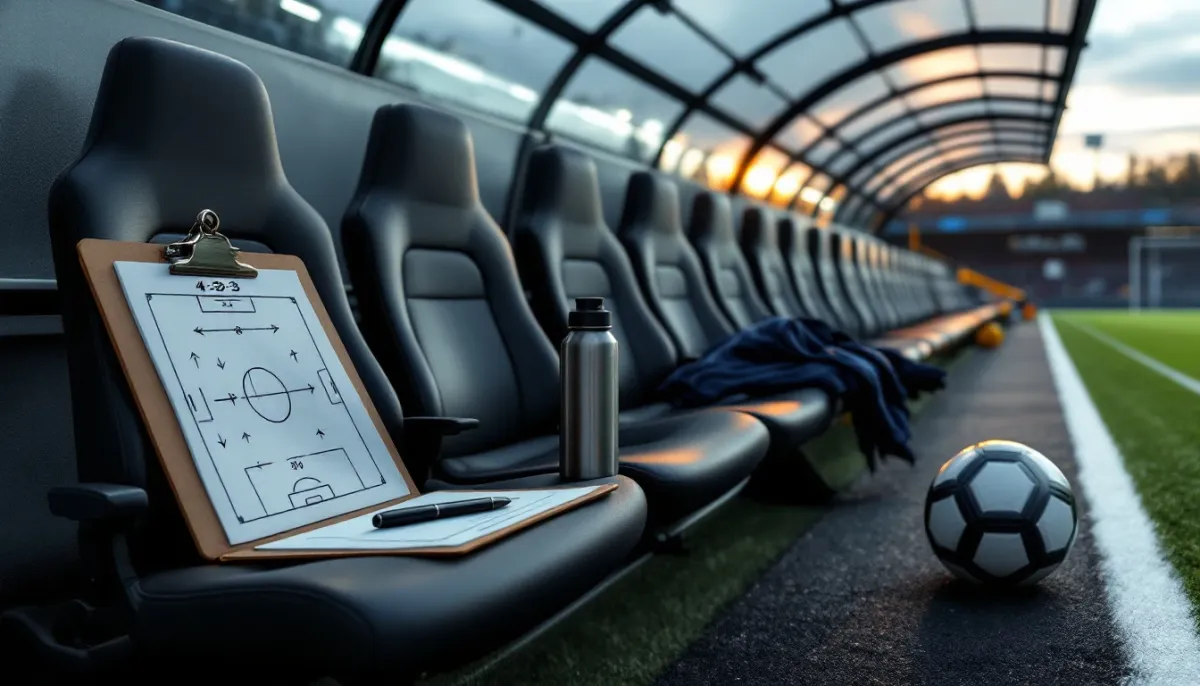
Two successive Spain head coaches, the same base shape, different ideas about how to play it.
- Luis Enrique (2018–2022): Euro 2020 semi-finalist, 2022 World Cup last-16 loss to Morocco on penalties.
- Luis de la Fuente (since December 2022): 2023 Nations League and Euro 2024 with 7 wins in 7 games.
- What they share: 4-3-3 with a single pivot.
- What changes: De la Fuente accepts less possession, brings wide wingers back to the touchline and prioritises direct play.
- Specific effect: ended the run of three consecutive penalty shootout defeats.
Two consecutive cycles: what De la Fuente actually inherited
When Luis Enrique left Spain on 8 December 2022, after losing to Morocco on penalties in the round of 16 at the Qatar World Cup, he left a team with a very clear identity: high possession, aggressive pressing and a direct public message that during the tournament went viral through his Twitch streams. The choice for his successor was continuity or reset.
Luis de la Fuente took the job two days later, on 10 December 2022. He didn't come from outside: he had been inside the federation since 2013 with the U19, U21 and Olympic sides, and he already knew a big part of the generation he would coach (Fabián Ruiz, Dani Olmo, Mikel Merino, Mikel Oyarzabal and Unai Simón had all played for him in youth setups). The full breakdown of that generation and how they crossed from the U21 to the senior side is in how De la Fuente built the U21 before the senior team.
The question from fans and media was clear: what would change and what would stay? The answer arrived in eighteen months: Nations League 2023 (final won on penalties against Croatia) and Euro 2024 with seven wins in seven games and no penalty shootouts, two tournament records. Several players who had been with Enrique stayed central. For the full background on each, start from the Luis de la Fuente career and the Luis Enrique career.
What each one won (and the difference that hurts the most)
| Tournament | Luis Enrique (2018-2022) | Luis de la Fuente (2022-) |
|---|---|---|
| World Cup | 2018 R16 (lost to Russia on penalties) 2022 R16 (lost to Morocco on penalties) | 2026 (in progress) |
| European Championship | 2020 semi-final (lost to Italy on penalties) | 2024 winner (7/7 games) |
| Nations League | 2021 finalist (lost 2-1 to France) | 2023 winner (vs Croatia) |
| Penalty shootouts | 3 consecutive losses | 1 won (Croatia, NL 2023) |
The most revealing data point in the comparison is the penalty shootouts. Luis Enrique lost three decisive shootouts back to back: Russia 2018 (World Cup R16), Italy 2020 (Euro semi-final) and Morocco 2022 (World Cup R16). Spain dominated possession in all three without turning it into goals. De la Fuente has only had to face one shootout (Nations League 2023 vs Croatia) and won it. At Euro 2024 he avoided penalties altogether: 7 wins inside 90 minutes or extra time (Merino's 119th-minute goal against Germany).
This doesn't make one automatically better than the other. It does explain a big part of the public perception: two similar cycles in football terms, very different competitive ledgers.
Possession, pressing and shape: the real tactical comparison
Both coaches start from a 4-3-3 with a single pivot. That is the biggest continuity and it lives in two names: Sergio Busquets for Luis Enrique, Rodri for De la Fuente. In a football world that increasingly leans on a double pivot, both kept a minority idea.
Beyond that, the differences are clear:
- Possession. Luis Enrique's Spain averaged numbers close to 70% in top games (76% vs Germany at the 2022 World Cup). De la Fuente's side runs at 62-65% in tough games (65% in the Euro 2024 final vs England) and accepts more direct phases when the opponent locks the centre.
- Wingers. Luis Enrique favoured associative wingers who came inside between the lines (Olmo, Ferran Torres, Sarabia). De la Fuente brought back the pure wide winger hugging the touchline (Yamal, Nico Williams), forcing the opposition full-back to stay wide and opening the middle for the interiors.
- Pressing. Enrique pressed with less containment: he accepted being stretched in order to push more players up. De la Fuente runs an oriented press, forcing the opponent to one specific side and dropping back quickly into a mid-block if the first press fails.
- Build-up. Enrique asked his centre-backs to carry the ball and start very deep. De la Fuente alternates between a back three (low full-back plus two CBs) and an asymmetric inverting full-back to free the right winger, a role Carvajal performed at Euro 2024.
For the full tactical breakdown of De la Fuente's setup with starting XI and match examples, see the dedicated piece on Spain's 4-3-3 under Luis de la Fuente.
Managing the young generation: Gavi, Pedri, Yamal
Both coaches trusted very young players, but in different ways. Luis Enrique picked Pedri aged 18 for Euro 2020 (he played all 5 games and was voted Young Player of the Tournament) and Gavi aged 17 for the 2022 World Cup (started the historic 7-0 opener against Costa Rica). In both cases his public backing was loud: Enrique defended them from criticism with his usual direct tone.
De la Fuente kept the bet and pushed it further with Lamine Yamal, who debuted at 16 in September 2023 and started every game at Euro 2024. At 16 years and 362 days, Yamal became the youngest goalscorer in European Championship history in the semi-final against France. He also locked in Nico Williams (22 in the final), kept Pedri central (21) and brought Olmo back to his best role.
What sets them apart is not the bravery with the young players but what they do with them once they arrive: Enrique dropped them into a very specific identity and asked them to adapt quickly; De la Fuente builds the tactical plan around their strengths (Yamal isolated wide, Williams attacking the byline) rather than asking them to fit a pre-existing mould.
The coach's Sunday summary
Open course calls, up-to-date guides and new posts. Free, with one-click unsubscribe.
Leave your email and get the next issue:
Public communication: Twitch versus institutional tone
The most visible difference between the two is not on the pitch, it is how they speak in public. During the 2022 World Cup, Luis Enrique became an international story for his Twitch streams from Spain's Qatar camp: he cooked, broke down press conferences, answered fans and journalists. The Wall Street Journal and ESPN ran features on it as a brand-new way to connect with the public. For some it was approachability; for others it was unnecessary exposure of the head coach.
De la Fuente has gone the opposite way. His tone is institutional, his statements are short and predictable, almost always inside the framework of official RFEF press conferences. He has no personal channels, opens no parallel pipelines and rarely engages in non-sporting controversy. That low profile keeps the public conversation focused on what happens on the pitch, not on what comes out of the dugout.
Neither model is better in the abstract. The cost and the risk are different: the Enrique model needs a coach with a very strong media profile and lots of control; the De la Fuente model needs results to justify the silence. Without Euro 2024 behind him, his silence would be questioned a lot more.
Continuities the debate doesn't talk about enough
Public debate tends to exaggerate the breaks. The reality is that De la Fuente keeps more of the Luis Enrique model than it looks:
- The 4-3-3 with a single pivot. Identical structural plan. Different pivot (Rodri instead of Busquets), same idea.
- Building from the back. Centre-backs still carry, full-backs still receive in advanced positions. That technical demand came from Enrique.
- The associative interior. Pedri and Dani Olmo remain central pieces. Pedri played for both.
- The trust in young talent. Pedri, Gavi, Yamal are products of the same decision: pick the best player even if he's 17.
- The La Masia spine. Both cycles leaned on the Barcelona academy bloc.
The differences live in the nuances (vertical vs associative wingers, 65 vs 70% possession, reserved vs frontal communication) and in the final competitive outcome (3 lost shootouts vs 0). An honest comparison doesn't talk about rupture, it talks about managed evolution.
What a coach can learn from each
For a grassroots or development coach, both profiles leave different and complementary lessons:
- From Luis Enrique: how to build a recognisable identity. His Spain could be understood in two minutes of video: high possession, aggressive press, associative wingers, always playing through the middle. A strong identity organises sessions, call-ups and message. The risk is not knowing how to adapt when context demands something else.
- From Luis de la Fuente: how to tune the plan to the players you have. He inherited a generation with two uniquely vertical wingers (Yamal, Williams) and reshaped the model to make the most of that trait. The identity isn't sacrificed, it's modulated. Also how to manage the coach's ego: his media silence kept the spotlight on the pitch.
- From both: the trust in young players when they're ready. Without the calls of Pedri at 18, Gavi at 17 and Yamal at 16, neither the 2020-22 era nor the 2024 title exists.
To dig into how these choices translate into formal coaching education, see how to become a youth football coach in Spain and the difference between Técnico Deportivo and UEFA licences.
Conclusion: two coaches with the same base, two different stories
Luis Enrique's Spain and Luis de la Fuente's Spain share more structure than the public debate admits: the 4-3-3, the single pivot, the bet on La Masia and on young talent. What divides them are tactical adjustments (vertical wingers, moderate possession, oriented pressing), the opposite communication choice and, above all, the competitive outcome.
When Enrique left, he left three lost penalty shootouts and a very clear identity. When De la Fuente's cycle is reviewed in five years, the headline will be Euro 2024 with 7 straight wins without spot kicks and the start of the 2026 World Cup. For a coach, the lesson is that tactical identity is the foundation; what decides the legacy is the fine-tuning to context and the ability to close out games.
About the author

Content produced by RutaMister from practical experience, editorial review and a training-focused approach for grassroots football coaches.
Frequently asked questions
Who coached Spain first, Luis Enrique or Luis de la Fuente?
Luis Enrique coached Spain first, in two spells: 2018-2019 and 2019-2022, until the last-16 elimination on penalties against Morocco at the Qatar World Cup. His direct successor was Luis de la Fuente, who took the role on 10 December 2022, two days after Luis Enrique's exit.
How many trophies did each one win with Spain?
Luis Enrique: no trophies with Spain (Euro 2020 semi-finalist, 2021 Nations League finalist against France, R16 at both the 2018 and 2022 World Cups). Luis de la Fuente: the 2023 Nations League, with the final won against Croatia on penalties, and Euro 2024 with 7 wins in 7 games, a tournament record.
How does Spain's possession compare under Luis Enrique and De la Fuente?
Luis Enrique's Spain averaged close to 70% possession in top games (76% vs Germany at the 2022 World Cup). De la Fuente's side runs at 62-65% in tough games (65% in the Euro 2024 final). The drop is deliberate: De la Fuente accepts more direct phases when the opponent locks the centre.
How many penalty shootouts did Luis Enrique lose with Spain?
Three consecutive shootouts, all in decisive knockout games: Russia 2018 (World Cup R16), Italy 2020 (Euro semi-final) and Morocco 2022 (World Cup R16). Spain dominated possession in all three without turning it into goals. By contrast, De la Fuente won the only shootout he has faced (Croatia, 2023 Nations League).
Why did Luis Enrique leave Spain?
The RFEF chose not to renew his contract after the 2022 World Cup last-16 loss to Morocco on penalties (8 December 2022). In that game Spain dominated 120 minutes without scoring and missed their first three spot kicks. Luis de la Fuente was named head coach two days later.
Do the two coaches call up the same players?
There is a big overlap. Unai Simón, Fabián Ruiz, Dani Olmo, Mikel Oyarzabal, Mikel Merino and Pedri played for both. De la Fuente's big additions were locking in Lamine Yamal, Nico Williams and bringing back Rodri as the undisputed pivot. Carvajal played for both but is not in the 2026 World Cup squad.
Who was more public-facing?
Luis Enrique, by a long way. During the 2022 World Cup he opened a Twitch channel from Spain's Qatar camp where he cooked, broke down press conferences and answered fans live. It made international headlines. De la Fuente keeps an institutional profile: short statements at official RFEF press conferences and no personal social accounts.
Did De la Fuente change the methodology a lot or continue Luis Enrique's?
He continues more than it seems. He keeps the 4-3-3 with a single pivot, building from the back, the La Masia spine and the trust in young players. He adjusts the wingers (vertical instead of associative), brings down possession a notch and reorganises the press around an oriented trap. It is evolution, not rupture.