Luis Enrique: from competitive character to a recognisable playing model
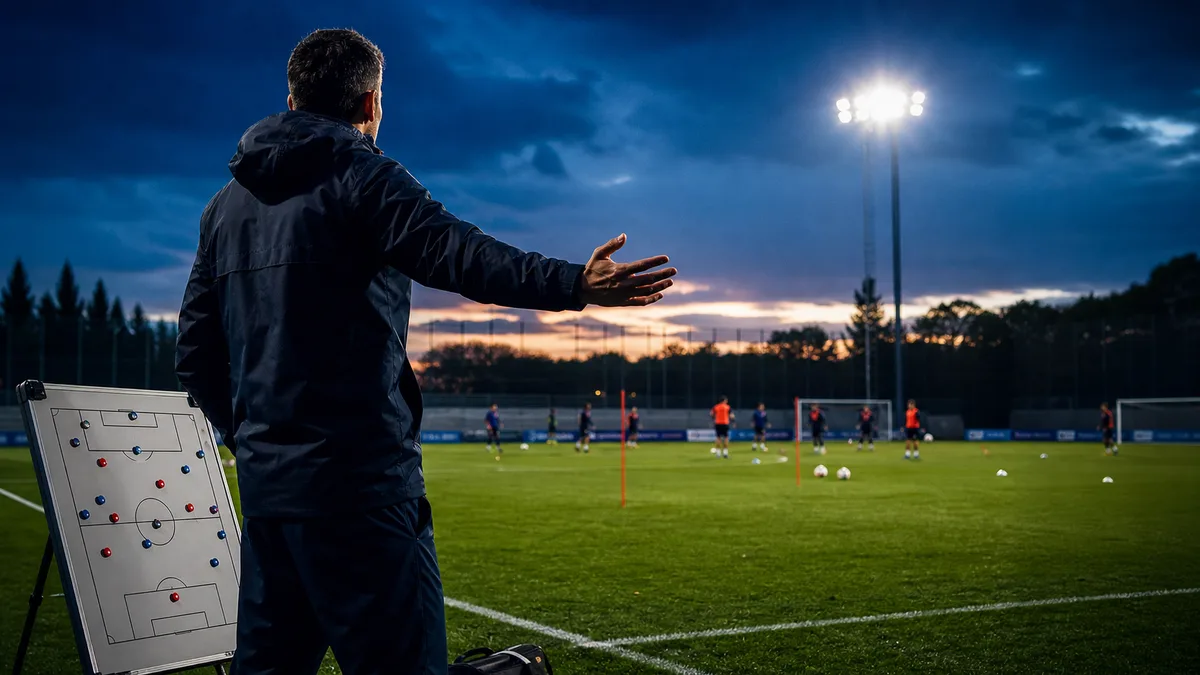
Luis Enrique represents a coaching profile defined by identity, high pressing and firm group management. For grassroots football, his case shows how to train principles without copying elite structures blindly.
- Elite playing career: Sporting de Gijón, Real Madrid and FC Barcelona.
- Coaching path: Barça B (2008), Roma, Celta de Vigo, FC Barcelona, Spain and PSG.
- Peak achievement: the 2014-15 treble with FC Barcelona.
- Game model: recognisable 4-3-3, counter-pressing and possession with intent (draw, progress, attack).
- Lesson for grassroots: identity is trained, not declared, and pressing must be built on distances and cover before being demanded.
Career
Luis Enrique Martínez was born in Gijón in 1970 and built his first football identity on the pitch. He made his professional debut at Sporting de Gijón, moved to Real Madrid and later became an important figure at FC Barcelona. That playing career already reveals several traits that later appeared on the bench: energy, competitiveness, versatility and strong personality.
As a coach he started at Barça B, a particularly useful stage for understanding his method because he worked with developing players, high technical demands and the need to compete without losing sight of development. He then coached Roma, Celta Vigo, the FC Barcelona first team, the Spanish national team and Paris Saint-Germain.
His most visible period came at Barcelona, where he won the 2014-15 treble with an extraordinary team. But reducing his profile to Messi, Neymar and Suárez would be too narrow. Before and after that stage, there were decisions, adjustments and lessons that better explain the coach: how he presses, how he organises build-up, how he manages hierarchies and how he sustains an idea under pressure.
Method
Luis Enrique's method starts from a clear idea: the team must be recognisable in possession and aggressive when it loses the ball. He does not seek decorative possession. Circulation must help attract, progress, find advantages and attack quickly when space appears.
His model is often associated with a 4-3-3, but the drawing is not the essential point. What matters are the principles. He wants width, deep wingers, midfielders able to receive between lines, full-backs who read height and a counter-press that prevents the opponent from running comfortably. That logic connects with turning each session into a practical task linked to the match.
At Barcelona he was more vertical than other coaches from the same environment. With Spain he prioritised control, patience and rational occupation of space. At PSG he has had to build a more collective block after years marked by major individual stars. That adaptation teaches something: keeping identity does not mean repeating the same plan every time.
At the other end of the stylistic pendulum sits the defensive pragmatism of José Mourinho: comparing both profiles helps understand that there is no single path to a dressing room that competes.
Lessons for grassroots football
The first lesson is that identity is not declared; it is trained. If a team wants to press high, it is not enough to say so in the team talk. Distances, body orientation, pressing triggers, nearby cover and immediate reaction after loss must be worked on.
The second lesson is that possession must have intention. In grassroots football, coaches often use rondos and possession tasks with little connection to the game. The useful question is always: does this task help us progress, fix opponents, turn, attract or finish? If it answers nothing, it probably only keeps players busy.
The third lesson is group management. Luis Enrique transmits authority, but the value for young coaches is not in copying the hard gesture. It is in preparing clear rules, sustaining criteria and communicating without turning every correction into a personal battle. For a new coach, this connects with many mistakes from the first year on the bench.
The coach's Sunday summary
Open course calls, up-to-date guides and new posts. Free, with one-click unsubscribe.
Leave your email and get the next issue:
Inspired exercises
1. Counter-pressing in a reduced area. Two teams play possession in a 25x20 metre rectangle with two outside mini-goals. When a team loses the ball, it has five seconds to recover it. If it succeeds, it scores double. If not, it must retreat to a marked line before pressing again.
2. Build-up with the third man. Work with a centre-back, full-back, holding midfielder and interior player against two or three pressers. The aim is not to build up for its own sake, but to attract the opponent and find the third man facing forward. The key correction is body shape before receiving.
3. Fast attack after recovery. In half a pitch, one team defends against the opponent's possession. When it wins the ball, it has eight seconds to finish using width and a vertical pass. The task links defensive aggression with attacking intention, one of the most recognisable connections in Luis Enrique's teams.
Mistakes when copying him
The first mistake is copying the 4-3-3 without looking at the players. A system only works if the squad's characteristics support it. If there are no deep wingers, no holding midfielder with good orientation or no defenders prepared to defend large spaces, the shape can break the team.
The second mistake is demanding a high press without preparing distances. In grassroots football, pressing high can be educational, but it can also become disorganised chasing. Before asking for aggression, the coach must teach when to jump, who covers and what happens if the opponent beats the first line.
The third mistake is confusing character with rigidity. Luis Enrique has a strong personality, but copying only that outer layer can damage the relationship with the group. A development coach needs authority, yes, but also listening, adaptation and patience to correct without blocking the player.
Timeline
- 1970. Born in Gijón.
- 1989. Makes his professional debut with Sporting de Gijón.
- 1991. Signs for Real Madrid.
- 1996. Joins FC Barcelona, where he becomes an important figure.
- 2008. Starts his coaching career with Barça B.
- 2011. Coaches Roma.
- 2013. Takes charge of Celta Vigo.
- 2014. Becomes FC Barcelona first-team coach and wins the treble in 2014-15.
- 2018. Appointed Spain head coach.
- 2023. Joins Paris Saint-Germain.
About the author

Content produced by RutaMister from practical experience, editorial review and a training-focused approach for grassroots football coaches.
Frequently asked questions
What defines Luis Enrique's coaching method?
The method of Luis Enrique is defined by high pressing, possession with purpose, attacking width and quick reaction after losing the ball. More than playing 4-3-3, what matters is connecting principles: attract the opponent, progress with the ball, finish and press again immediately when the team loses possession.
What can grassroots coaches learn from Luis Enrique?
Grassroots coaches can learn to build identity through concrete tasks. High pressing requires distances, cover and clear triggers; possession requires intention; leadership requires stable rules. The lesson is not to copy his system, but to adapt his principles to the team's real level.
Why should coaches avoid copying Luis Enrique's 4-3-3 directly?
Coaches should avoid copying it directly because the system depends on very specific profiles: deep wingers, a holding midfielder with awareness, dynamic interiors and defenders able to cover large spaces. In grassroots football, the shape must fit the group before imitating elite structures.
What was Luis Enrique's most important period as a coach?
His most recognised period was FC Barcelona, especially the treble-winning 2014-15 season. Even so, when analysing him as a coach, Barça B, Celta, Spain and PSG also matter because they show his ability to adapt to very different competitive environments.