How to coach under-7 players on the first day
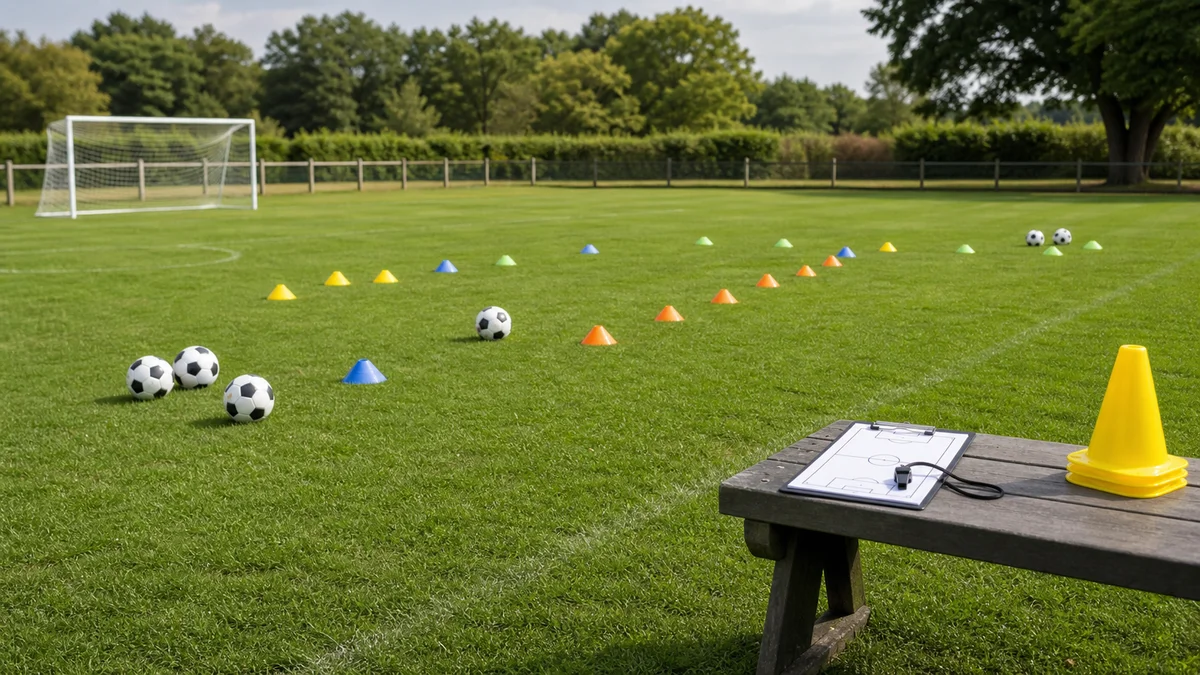
To coach under-7 players on day one, prepare a very simple session. Do not try to teach tactics or correct everything: the goal is that the children feel safe and want to come back.
- Short welcome and clear names, no long speeches.
- Ball games as the core content, not analytical drills.
- Few rules phrased in the positive.
- Plenty of practice time: ball at the feet, not standing in queues.
- Two basic habits as the goal (not ten): everything else can wait.
The first day is not about proving what you know
Doubting is normal: you are given a group of young children, perhaps 5 or 6 years old, and suddenly you have to lead a session. The temptation is to look for perfect drills, speak like an adult coach and fill training with instructions.
With under-7 players, the first day has another priority: helping the group enter the routine without fear. You need order, yes, but not a tactical lesson. You need every child to touch the ball, understand where to be, listen to one basic signal and finish wanting to return.
If this is also your first season as a coach, you can complement this guide with the article on the first year as a coach, because many management decisions begin in exactly these sessions.
Before starting: three things ready
Arrive early. At these ages, a coach who improvises equipment often loses the group before training has even started. Place cones, keep balls close and prepare two small spaces so there are no long waits.
- A meeting point. Always the same place to explain and close.
- An attention signal. For example, hand up and ball stopped under the sole.
- A safety rule. Nobody shoots if someone is collecting balls in front.
You do not need to explain ten rules. With young children, two well-repeated rules are worth more than a long talk nobody retains.
A simple 60-minute structure
A useful session can be very basic. What matters is that almost everything happens with the ball and with short instructions.
- 5 minutes: arrival, names and one clear instruction: keep the ball close and listen for the signal.
- 10 minutes: guided free play, each child with a ball, dribbling through the space.
- 15 minutes: ball chasing game, such as "escape the cones" or "cross the river".
- 15 minutes: simple finishing into small goals, without long lines.
- 10 minutes: 3v3 or 4v4 small-sided game.
- 5 minutes: short closing, water, praise and one idea to remember.
If you have less time, shorten the explanation, not the ball contact. With under-7 players, learning comes through many repetitions, not through listening to the coach for five straight minutes.
Which games work best at the start
Choose games where everyone is active. Avoid drills with one line and one child participating while the rest wait. At that age, waiting quickly turns into distraction.
- Colour dribbling: when you call a colour, they take the ball to that cone.
- Traffic lights: green dribble, yellow slow down, red stop the ball.
- Soft ball steal: one or two try to touch balls, with no tackles or collisions.
- Gates: score points by dribbling between two cones.
These games let you observe coordination, attention, relationship with the ball and behaviour without turning training into a test.
The coach's Sunday summary
Open course calls, up-to-date guides and new posts. Free, with one-click unsubscribe.
Leave your email and get the next issue:
What to correct and what to let go
On the first day there is no need to correct body orientation, system, pressing or complex decision-making. It is also not useful to stop every action. If you stop too much, children feel that playing is wrong.
Correct only what affects how the group works: listening to the signal, not pushing, not shooting when someone is in front and returning to the meeting point. For ball work, use very simple cues: "close to your foot", "head up for one second" or "try the other foot".
If you want to plan the following week better, write down what they understood and what became messy after training. That short review follows the same logic as a well-adjusted grassroots football session: look at what happened and turn it into a simple task.
The message to parents also matters
With under-7 players, families are part of the context. You do not need to give a speech, but you should set a calm line from the first day.
At the end, you can say something simple: "Today we wanted them to get to know each other, touch the ball a lot and understand two basic rules. We will go step by step." That message lowers strange expectations and prevents the first session from being compared with an older team.
If parents ask about positions, results or whether their child is doing well, answer calmly: at these ages you observe adaptation, enjoyment, attention and relationship with the ball. The rest will come later.
Common mistakes from new coaches
- Explaining too much. If you take more than a minute, you have probably already lost attention.
- Using long lines. Young children need movement, not waiting for a turn.
- Trying to play like adults. They do not need a system; they need ball experiences.
- Correcting everything. Choose one or two ideas and repeat them patiently.
- Forgetting the closing. Ending well helps the group associate training with safety and enjoyment.
Success is not everything looking perfectly organised, but being able to say: they touched the ball a lot, understood one signal, there was no unsafe chaos and the group wants to come back.
Conclusion
Coaching under-7 players on the first day requires more calm than sophistication. The younger the players, the more important it is to simplify: clear space, a ball for everyone, few rules, short games and a positive tone.
A coach who is starting out does not need to look like an expert in the first session. They need to create an environment where children can play, listen a little more each week and build basic habits without losing their excitement for football. As those kids grow, stepping up to a category with real competition changes the priorities: we cover it in how to coach alevín (U-12).
About the author

Content produced by RutaMister from practical experience, editorial review and a training-focused approach for grassroots football coaches.
Frequently asked questions
What should I do on day one with under-7 players if I have no experience?
Start with a very simple session: short introduction, every child with a ball, dribbling games, easy finishing and a small-sided game. With under-7 players, the priority is not tactics, but safety, basic order and many ball actions to observe the group.
How long should an explanation be with 5 or 6-year-olds?
It should be very short, ideally under one minute. Explain one rule, demonstrate quickly and let them play. If the task needs many conditions, it probably does not fit young children. It is better to correct during practice than to stop training constantly.
Are drills or games better for under-7 players?
At the start, ball games usually work better because they keep attention, movement and enjoyment high. Very analytical drills often create lines and disconnection. You can train dribbling, coordination, orientation and finishing through simple games with clear rules and safe spaces.
Which rules matter in the first training session?
Start with few rules: listen to one signal, stop the ball when the coach speaks, do not push and do not shoot if someone is in front. In grassroots football, those safety and attention rules support the session more than a long instruction list.